PDF Download China, Hong Kong, Taiwan, Inc.: The Dynamics of a New Empire
To get guide to check out, as exactly what your close friends do, you have to visit the link of guide web page in this website. The web link will certainly show how you will certainly obtain the China, Hong Kong, Taiwan, Inc.: The Dynamics Of A New Empire Nonetheless, guide in soft data will certainly be likewise very easy to read each time. You could take it right into the gizmo or computer unit. So, you could feel so very easy to overcome exactly what call as wonderful analysis experience.
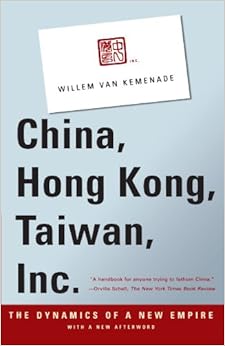
China, Hong Kong, Taiwan, Inc.: The Dynamics of a New Empire

PDF Download China, Hong Kong, Taiwan, Inc.: The Dynamics of a New Empire
What sort of reading book are you looking for now? If you are truly fond of the topic just like China, Hong Kong, Taiwan, Inc.: The Dynamics Of A New Empire, you can take it straight here. This book is really a normal publication. Yet, how the writer get the words to produce this book is so unbelievable. You might not discover anything special from the cover as well as the title of the book, yet you could obtain everything special from guide after read.
Also the rate of an e-book China, Hong Kong, Taiwan, Inc.: The Dynamics Of A New Empire is so inexpensive; lots of people are truly thrifty to reserve their money to get guides. The various other factors are that they feel bad and have no time at all to head to the publication company to look guide China, Hong Kong, Taiwan, Inc.: The Dynamics Of A New Empire to check out. Well, this is modern period; numerous e-books can be got effortlessly. As this China, Hong Kong, Taiwan, Inc.: The Dynamics Of A New Empire as well as more books, they can be entered really quick methods. You will certainly not should go outside to get this publication China, Hong Kong, Taiwan, Inc.: The Dynamics Of A New Empire
Time is yours as well as how you utilize your time is likewise yours. Yet right here, we will assist you to always utilize the time quite possibly. Reviewing a book both from soft data and also print data can aid you to make much better perception. You will understand even more regarding something new. When you don't review China, Hong Kong, Taiwan, Inc.: The Dynamics Of A New Empire, you could not recognize as well as recognize about a minimum of one point. But recognize, by supplying this advised publication, we are really certain that you could obtain it, also at the very least something.
Reviewing a book could aid you to boost your thought, minds, lesson, experiences, and also fun. Even you have read numerous type of publication; it will provide both exact same and various effects. For this publication, you could find a brand-new method related to just what you really require right now. By investing just few times a day to read China, Hong Kong, Taiwan, Inc.: The Dynamics Of A New Empire, you future will certainly be better with the lesson to obtain currently. Prepare and always advise about it!
Language Notes
Text: English (translation) Original Language: Dutch
Read more
From the Inside Flap
f June 30, Hong Kong was officially passed back to China. This event will mark what Willem van Kemenade sees as the start of an increasingly problematic -- and even dangerous -- reintegration of the old Chinese empire into a new world superpower. Since the early 1980s, investment money has been pouring into China from Hong Kong and trade has escalated at a rocket's pace. A few years later, the same pattern began between China and Taiwan. The combination of Hong Kong/Taiwan management, financial and export know-how with China's inexhaustible pool of cheap labor and land has enabled China in one decade to leap from an impoverished revolutionary state to a major international trading power. This economic boom, in conjunction with the violation of intellectual property rights, systematic tax fraud, and the corruption of the police force, has helped shape the "socialist market economy," China's third way -- and a new mix of old-fashioned Soviet Communism and East Asian capitalism.Th
Read more
See all Editorial Reviews
Product details
Paperback: 476 pages
Publisher: Vintage; lst Vintage Books ed edition (June 30, 1998)
Language: English
ISBN-10: 0679777563
ISBN-13: 978-0679777564
Product Dimensions:
5.5 x 1 x 8.5 inches
Shipping Weight: 1.3 pounds (View shipping rates and policies)
Average Customer Review:
4.5 out of 5 stars
5 customer reviews
Amazon Best Sellers Rank:
#4,812,336 in Books (See Top 100 in Books)
The author is a Dutch journalist for a Dutch newspaper based in Asia for twentysomething years and his book was translated into English a year later. Over 5 years ago, he wrote with a provocative title; similar to vanWolferen, an author (0-394-57796-5) who popularized the mgmt-speak: "Japan Inc," along with Business Week magazine, in the mid 1980s, when megaconglomerates (keiretsu), such as Mitsubishi and Sumitomo, were conspiring to conquer the world again, this time economically instead of militarily after WW II plus 40 years. Then later Mark Clifford wrote (1-56324-386-5) of a similar business conspiracy being duplicated with the chaebols of "Korea Inc," such as Samsung and Hyundai, after the Korean conflict (1950) plus 40 years. I found that this author has written a profound analysis on a potentially unified China (PRC+HK+TW), and interprets recent history to show the reader how China could set a similar course since the Cultural Revolution (1975) plus 40 years. Although he is a westerner who knows the native language, he appears to give a more neutral, less biased portrait of the emerging giant.While not explicitly claimed by the author, his experience in reporting about China has started in the late 70s, first from Indonesia and then in the Chinas. This means that he observed the China ferment since the Cultural Revolution. So his writings must have included the Gang of 4 (79), the Four Modernizations (80s), Third Line Project (relo key defense industry away from the vulnerable E coast), and Deng's Reform and Opening (92). His book includes a 3-page bibliography, 18 pages of notes, and a 14-page index for further study. From his vantage point, he could eavesdrop on the whispered goings-on in the CCP and Taiwanese governments in order to validate what is eventually released to the propaganda machines.Of the key areas in his book, Chap 3, over 30 pages are devoted in describing the westernization of Taiwan, yet he weaves in the overall strategy used by the PRC so that Taiwan will eventually return to the fold (p112). And in Chap 8, a 12-page analysis on why Taiwanese were allowed to create wholly owned factories in the Xiamen SEZ, directly across the Taiwan Straits in Fujian province, PRC. This book is great because it identifies the younger CCP lieutenants that one needs to watch as they gain experience and power. Furthermore in the 13-page Chap 13, he discusses why the greater HK / Canton / Shenzhen SEZ / Guangdong province area will be the first megalopolis that truly will embrace capitalism with Chinese characteristics. The industrial infrastructure is alive and well all united with the Cantonese dialect; the 5th ASEAN Tiger is ready to move. And finally in 15-page next to the last Chap 18, he explains the changes in politics, society, and culture that will take place during China's coming out period that will last through this decade. The author and translator have created an understandable read, one that has deciphered the seemingly conflicting news bytes that are in American press. One that makes it easier to see the forest and the trees, yet helping the reader understand the telltales so you can watch them bend as the wind blows.Just this year, I see that Wal-Mart is selling refrigerators made by Haier, which is direct from the emerging Chinese capitalists in the PRC. This is the first consumer harbinger with a PRC brand name. This breaks the tradition of OEM contract manufacturing, first of clothing, shoes, and toys, then upscale to TVs, VCRs, and stereo gear. Now China is superceding the OEM manufacture of high tech computer components which are in-magnanimously buried underneath the "Intel inside" sticker on PC cases, which have been made in the PRC all through the 90s. The "Made in China" sticker is being flagerantly and ubiquitously waved in front of the world.Undeniably since 2K, the march with "China Inc" has begun. After taking some lessons from history and reading van Kemanade's book, it becomes obvious in predicting the events to come. As aptly alluded to in David Sheff's new book (0-06-000599-8), the WTO gates have rang open a year ago (9/01); the modern Marco Polo shall be wise to heed the new adage, "Go east, young man, go east to China!"
I picked this book up at ..., not really knowing what to expect. To my surprise, I ended up with a very detailed account of the economic and political situation in greater China (eastern continental Asia plus Japan, basically).To begin with, this book really shows how the economic situation dominates the politics and realities of China. The incomplete transformation to a market economy where it is now legal, and even encouraged, to strive for profit is discussed throughout the book at varying levels. Keep in mind that China is still Communist - competition and striving for profit/growth is only somewhat the antithesis of Marxist theory. Reversing Mao's egalitarianism in favor of Deng's "those who can, get rich and it will trickle down" is something that has led to corruption and lack of moral guidance for most Chinese.It also contains a good portrayal of the conflict between the gerontocracy and the younger (heh, 55-65 being young) generation more inclined to quicker and more complete economic reform. The government's ever changing policy on Confucianism, for example, illustrates the current problem the Communists are having coming up with ideology for the changing situation. This is discussed especially near the end of the book (including some nice information about new folk heroes).The discussion on Communist theory displays some arguments that since China was never capitalist, they cannot proceed along the normal historical dialectic. I found this quite interesting. It seems the Chinese argue out of everything with paper-thin ideology, which is a recurring theme in this book - regarding relations with Taiwan, Hong Kong, Japan, America, just about everyone (including internal criticism of government policy).An important topic also discussed in this book is the nature of the neonationalism present in Chinese today, as well the probable nature of China's Communism in the future. It is suggested that the Communism will evolve to where it is political repression that is the rule, but that out of necessity economic freedom will be increasingly common. This will create problems for the Communist system, even as it attempts to reform itself. The translation is well done, and the statistics are also handled well.Oh, and for those who have been complaining about the second half of the book dealing with China's economic zones - I really found that part of the book to be the most informative. I assume most of us had very little knowledge of the northeast/xinjiang compared with our knowledge of Taiwan or Hong Kong. There was a good portrayal of Chinese racial relations with the Islamic portion to the west, and in the east with the Russians and Koreans. It was also interesting to learn more about the slow-motion invasion of the Siberia by the Chinese. This involves mass migration and illegal immigration, basically taking over towns that used to be Russian and turning the Russians into the lesser beings (as opposed to the imperialist notions circa old Shanghai), i.e. the mistreated waitresses and desperate barterers traveling to escape the economic problems in Russia itself. I would recommend this book to anyone with an interest in the subject matter and the will to learn a great deal about internal politics and conflict, as well as the economics signified by the "Inc." in the title.
I bought this book around the time of the HongKong handover and just read it now. I found the author very knowledgeable about Chinese history and culture, his political and economic arguments well-reasoned. The information in the book was also very helpful in some Asian international tax and business work my group is doing. I thought it was also good that the author lives in Beijing, giving him personal knowledge, and is neither American, British, Chinese, Hong Kong Chinese or Taiwanese, thereby avoiding any slant towards or prejudices against the major players in this saga. Overall, I learned a lot and I'd like to see him follow up in a year or two on subsequent developments. This book also got me interested in the history of Shanghai, so I ordered a few books on that subject.
Mr. van Kemenade, a journalist who has lived in mainland China for twenty years, has firsthand knowledge of Chinese history and society. He has written a detailed discussion about China's dynamic goal-oriented society, and about China's willingness to use long-term planning and almost ruthless determination to accomplish societal goals.Mr. van Kemenade discusses how China's internal economy is increasingly controlled by centralized planning. Mr. van Kemenade also discusses China's economic relationships with Taiwan, with China's neighbors, and with the world.China is the United States' largest trading partner. Every month our debt to China increases. This accumulating debt is a real and major transfer of wealth from the United States to China. We cannot assess the true cost until the bill comes due.
China, Hong Kong, Taiwan, Inc.: The Dynamics of a New Empire PDF
China, Hong Kong, Taiwan, Inc.: The Dynamics of a New Empire EPub
China, Hong Kong, Taiwan, Inc.: The Dynamics of a New Empire Doc
China, Hong Kong, Taiwan, Inc.: The Dynamics of a New Empire iBooks
China, Hong Kong, Taiwan, Inc.: The Dynamics of a New Empire rtf
China, Hong Kong, Taiwan, Inc.: The Dynamics of a New Empire Mobipocket
China, Hong Kong, Taiwan, Inc.: The Dynamics of a New Empire Kindle
0 komentar:
Posting Komentar